


Hydra | Compact Rugged Router in a Cable
BotBlox
$300.00
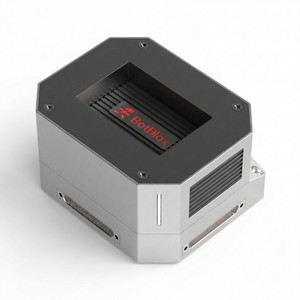
A tiny rugged, security qualified Router, hidden in the cable. Designed to fly, roll, and drive.
A three-port Ethernet router. Built into the cable.
The ideal router is no router at all. With Hydra, it disappears into the cable run.
Hydra puts an OpenWrt router inside a tiny three-way Ethernet cable junction, with a target enclosure footprint of just 21 × 37 mm. Connect three 10/100BASE-T devices and supply power through passive PoE—all at the junction of the cables.
No separate router board to mount, heatsink, or fit into another enclosure. The networking becomes part of the cable assembly.
Key features
- Cable-integrated router, targeting a 21 × 37 mm enclosure footprint
- 3 × 10/100BASE-T Ethernet ports
- OpenWrt, with planned support for VLANs, firewalling, VPNs, and more
- 800 MHz processor, 2 Gbit RAM, and 16 GB storage
- 5–30 V input via passive PoE
- Hardware AES-256 and an on-chip random number generator
- Optional RF SoC for CLI access, disableable in hardware
- Target operating range of −45°C to +85°C, with altitude, shock, and vibration tolerance under development
Put the router where the cables meet
A small router board still needs somewhere to go. Mounting hardware, connectors, cooling, and cable routing all take up space beyond the board itself.
Hydra brings those electronics into the cable junction. Its compact enclosure connects three Ethernet cable runs, letting you integrate routing directly into the wiring of your system.
With a target footprint of 21 × 37 mm, Hydra is designed specially for space-constrained platforms.
OpenWrt inside
Hydra is built around the SAM9X75D2GT, with an 800 MHz processor, 2 Gbit RAM, and 16 GB storage running OpenWrt.
The planned software feature set draws on OpenWrt’s networking capabilities, including VLANs, firewall rules, port mirroring, and VPNs such as WireGuard. Configure network segmentation, control traffic between devices, and establish secure remote connections through a familiar software platform.
Supported packages and forwarding performance will be confirmed through firmware testing.
Security and control
Hydra’s processor provides hardware AES-256 support and an on-chip true random number generator specified as compliant with FIPS 140-3 requirements.
An optional RF system-on-chip provides wireless CLI access. For secure environments, the RF device can be disabled in hardware.
Power through the cable
Hydra accepts 5–30 V via passive PoE, carrying power through the Ethernet cabling and eliminating a separate power lead at the junction.
The electrical documentation will specify the pinout, compatible power sources, and power budget. Passive PoE does not use IEEE 802.3af/at/bt negotiation.
Designed for demanding environments
Hydra is being developed for a −45°C to +85°C operating range, with a mechanical design intended to tolerate altitude, shock, and vibration.
Environmental ratings and test conditions will be published after validation.
Technical specifications
|
Parameter |
Specification |
|
Ethernet interfaces |
3 × 10/100BASE-T |
|
Processor |
SAM9X75D2GT |
|
Processor speed |
800 MHz |
|
RAM |
2 Gbit |
|
Storage |
16 GB |
|
Operating system |
OpenWrt |
|
Planned networking capabilities |
VLANs, firewalling, Layer 2 filtering, port mirroring, NAT, IPv4/IPv6, policy-based and dynamic routing, multiple IP addresses per interface, multi-WAN, load balancing, failover, high-availability redundancy, DNS/DHCP servers, traffic shaping, bandwidth controls, and VPNs including WireGuard; pending firmware validation |
|
Cryptography |
Hardware AES-256 support |
|
Random number generation |
On-chip TRNG specified as compliant with FIPS 140-3 requirements |
|
Wireless CLI access |
Optional RF SoC; disableable in hardware |
|
Power input |
Passive PoE |
|
Input voltage |
5–30 V |
|
Form factor |
Three-way Ethernet cable junction |
|
Target enclosure footprint |
Approximately 21 × 37 mm; final dimensions to be confirmed |
|
Target ingress protection |
IP67; pending validation |
|
Target operating temperature |
−45°C to +85°C; pending validation |
Development status
Hydra is in development. Final enclosure dimensions, cable options, software support, performance, and environmental specifications will be published after testing.
If you’re working on a drone or another space-constrained system where Hydra could be useful, get in touch!
info@botblox.com
See product brief here.
A tiny rugged, security qualified Router, hidden in the cable. Designed to fly, roll, and drive.
A three-port Ethernet router. Built into the cable.
The ideal router is no router at all. With Hydra, it disappears into the cable run.
Hydra puts an OpenWrt router inside a tiny three-way Ethernet cable junction, with a target enclosure footprint of just 21 × 37 mm. Connect three 10/100BASE-T devices and supply power through passive PoE—all at the junction of the cables.
No separate router board to mount, heatsink, or fit into another enclosure. The networking becomes part of the cable assembly.
Key features
- Cable-integrated router, targeting a 21 × 37 mm enclosure footprint
- 3 × 10/100BASE-T Ethernet ports
- OpenWrt, with planned support for VLANs, firewalling, VPNs, and more
- 800 MHz processor, 2 Gbit RAM, and 16 GB storage
- 5–30 V input via passive PoE
- Hardware AES-256 and an on-chip random number generator
- Optional RF SoC for CLI access, disableable in hardware
- Target operating range of −45°C to +85°C, with altitude, shock, and vibration tolerance under development
Put the router where the cables meet
A small router board still needs somewhere to go. Mounting hardware, connectors, cooling, and cable routing all take up space beyond the board itself.
Hydra brings those electronics into the cable junction. Its compact enclosure connects three Ethernet cable runs, letting you integrate routing directly into the wiring of your system.
With a target footprint of 21 × 37 mm, Hydra is designed specially for space-constrained platforms.
OpenWrt inside
Hydra is built around the SAM9X75D2GT, with an 800 MHz processor, 2 Gbit RAM, and 16 GB storage running OpenWrt.
The planned software feature set draws on OpenWrt’s networking capabilities, including VLANs, firewall rules, port mirroring, and VPNs such as WireGuard. Configure network segmentation, control traffic between devices, and establish secure remote connections through a familiar software platform.
Supported packages and forwarding performance will be confirmed through firmware testing.
Security and control
Hydra’s processor provides hardware AES-256 support and an on-chip true random number generator specified as compliant with FIPS 140-3 requirements.
An optional RF system-on-chip provides wireless CLI access. For secure environments, the RF device can be disabled in hardware.
Power through the cable
Hydra accepts 5–30 V via passive PoE, carrying power through the Ethernet cabling and eliminating a separate power lead at the junction.
The electrical documentation will specify the pinout, compatible power sources, and power budget. Passive PoE does not use IEEE 802.3af/at/bt negotiation.
Designed for demanding environments
Hydra is being developed for a −45°C to +85°C operating range, with a mechanical design intended to tolerate altitude, shock, and vibration.
Environmental ratings and test conditions will be published after validation.
Technical specifications
|
Parameter |
Specification |
|
Ethernet interfaces |
3 × 10/100BASE-T |
|
Processor |
SAM9X75D2GT |
|
Processor speed |
800 MHz |
|
RAM |
2 Gbit |
|
Storage |
16 GB |
|
Operating system |
OpenWrt |
|
Planned networking capabilities |
VLANs, firewalling, Layer 2 filtering, port mirroring, NAT, IPv4/IPv6, policy-based and dynamic routing, multiple IP addresses per interface, multi-WAN, load balancing, failover, high-availability redundancy, DNS/DHCP servers, traffic shaping, bandwidth controls, and VPNs including WireGuard; pending firmware validation |
|
Cryptography |
Hardware AES-256 support |
|
Random number generation |
On-chip TRNG specified as compliant with FIPS 140-3 requirements |
|
Wireless CLI access |
Optional RF SoC; disableable in hardware |
|
Power input |
Passive PoE |
|
Input voltage |
5–30 V |
|
Form factor |
Three-way Ethernet cable junction |
|
Target enclosure footprint |
Approximately 21 × 37 mm; final dimensions to be confirmed |
|
Target ingress protection |
IP67; pending validation |
|
Target operating temperature |
−45°C to +85°C; pending validation |
Development status
Hydra is in development. Final enclosure dimensions, cable options, software support, performance, and environmental specifications will be published after testing.
If you’re working on a drone or another space-constrained system where Hydra could be useful, get in touch!
info@botblox.com
See product brief here.