

RouterCore Nano | 8 x 1G + 2 x 10G Embeddable Router
BotBlox
$620.00
Tiny, Low Power, Embeddable, 1G/10G Routing
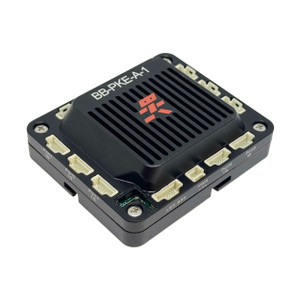
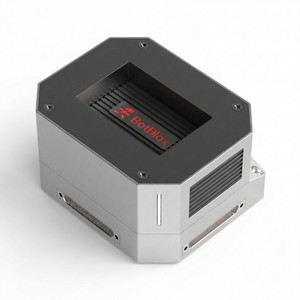
RouterCore Nano brings 8 x 1GBASE-T + 2 x 10G in an ultra small, embeddable module. RouterCore Nano is designed for modern ethernet-based autonomous platforms which are moving to ethernet as a communications backplane. By providing sophisticated network and traffic management, without adding significant size, weight or power, RouterCore Nano enables far more powerful systems to be built.
RouterCore Nano is 42mm x 42mm x 11mm, drawing a maximum of 5 watts at full traffic load. This achieves:
- Bandwidth volume density of 144Mbps per cm³
- Bandwidth power density of 5,600Mbps per Watt
Nothing on the market currently achieves such functionality in such a small package.
Plug and play ready
RouterCore Nano contains all ethernet magnetics and accepts unstable input voltages from 4 to 60V (transient and voltage protected) meaning it can be dropped straight into a carrier board. It boots up in seconds as an unmanaged switch, with command line and GUI access for routing features available over over UART or ethernet ports
Insane connectivity
- 8 x 10/100/1GBASE-T ports (magnetics included)
- 2 x 10G capable USXGMII/10GBASE-R/SGMII/1000BASE-X ports*
- 1 x TTL level UART serial ports
- 1 x USB2.0 port
- 1 x CAN ports
- 4 x GPIO ports
*Used for SFPs, CPU connector, or RouterCore to RouterCore expansion.
Insane functionality
RouterCore supports the following routing abilities
- Full Layer 2 switch functionality
- Full Layer 3 routing functionality
- RSTP/STP
- IEEE1588v2 PTP (E2E and P2P, Transparent and Boundary Clock)
- VLAN (IEEE 802.1Q Tag Based or Port Based)
- Multi-WAN
- Multicast routing (IGMP V1/V2/V3 and MLD)
- QoS (IPv4/IPv6, QoS/CoS packet prioritization - 802.1p)
- Update over Ethernet ports
- SSH tunnelling
RouterCore Nano also supports
- UART TTL serial to ethernet conversion
- CAN to ethernet conversion
RouterCore Nano can support security-critical and FIPS 140-3-oriented deployments. Its onboard Microchip SAM9X75 processor provides hardware-accelerated AES-128/192/256 and SHA/HMAC cryptography, together with a FIPS 140-3-compliant true random number generator (TRNG).
Hardware security features include authenticated and encrypted Secure Boot, one-time-programmable secure key storage, a Physical Unclonable Function (PUF) for hardware-derived keys, external-memory scrambling and hardware tamper protection.
Combined with OpenWrt, RouterCore Nano supports secure networking features including stateful firewalling, IPsec/OpenVPN VPNs, SSH/TLS management and cryptographically signed software packages.
For security implementations, get in touch with our development partner, Tyr Labs (contact@tyrlaboratories.com).
OpenWRT or Linux
RouterCore Nano runs OpenWRT by default but can be flashed with any different flavor of Linux, allowing full routing and software functionality.
Technical Specifications
- Voltage input: 4 - 60V (transient and reverse protected)
- Power consumption: 5.5 Watts (all ports operating), 1.8 Watts (idle)
- Dimensions: 42 x 42 x 11 mm
- Ethernet Ports: 8 x 10/100/1GBASE-T + 2 x 10G USXGMII/10GBASE-R/SGMII/1000BASEoX
- CAN ports: 2
- UART ports: 2
- GPIO pins: 4
- Operating temperature: -40°C to 105°C
- Shock rating: 40G for 23ms, 90G for 6ms
- Total Ionizing Dose (Radiation): 20Krad[si]
3D CAD Model (Preliminary)
https://grabcad.com/library/routercore-nano-preliminary-1
NDAA Compliance
RouterCore Nano is assembled in the USA and is fully NDAA compliant. Get in touch for our compliance documentation.
Tiny, Low Power, Embeddable, 1G/10G Routing
RouterCore Nano brings 8 x 1GBASE-T + 2 x 10G in an ultra small, embeddable module. RouterCore Nano is designed for modern ethernet-based autonomous platforms which are moving to ethernet as a communications backplane. By providing sophisticated network and traffic management, without adding significant size, weight or power, RouterCore Nano enables far more powerful systems to be built.
RouterCore Nano is 42mm x 42mm x 11mm, drawing a maximum of 5 watts at full traffic load. This achieves:
- Bandwidth volume density of 144Mbps per cm³
- Bandwidth power density of 5,600Mbps per Watt
Nothing on the market currently achieves such functionality in such a small package.
Plug and play ready
RouterCore Nano contains all ethernet magnetics and accepts unstable input voltages from 4 to 60V (transient and voltage protected) meaning it can be dropped straight into a carrier board. It boots up in seconds as an unmanaged switch, with command line and GUI access for routing features available over over UART or ethernet ports
Insane connectivity
- 8 x 10/100/1GBASE-T ports (magnetics included)
- 2 x 10G capable USXGMII/10GBASE-R/SGMII/1000BASE-X ports*
- 1 x TTL level UART serial ports
- 1 x USB2.0 port
- 1 x CAN ports
- 4 x GPIO ports
*Used for SFPs, CPU connector, or RouterCore to RouterCore expansion.
Insane functionality
RouterCore supports the following routing abilities
- Full Layer 2 switch functionality
- Full Layer 3 routing functionality
- RSTP/STP
- IEEE1588v2 PTP (E2E and P2P, Transparent and Boundary Clock)
- VLAN (IEEE 802.1Q Tag Based or Port Based)
- Multi-WAN
- Multicast routing (IGMP V1/V2/V3 and MLD)
- QoS (IPv4/IPv6, QoS/CoS packet prioritization - 802.1p)
- Update over Ethernet ports
- SSH tunnelling
RouterCore Nano also supports
- UART TTL serial to ethernet conversion
- CAN to ethernet conversion
RouterCore Nano can support security-critical and FIPS 140-3-oriented deployments. Its onboard Microchip SAM9X75 processor provides hardware-accelerated AES-128/192/256 and SHA/HMAC cryptography, together with a FIPS 140-3-compliant true random number generator (TRNG).
Hardware security features include authenticated and encrypted Secure Boot, one-time-programmable secure key storage, a Physical Unclonable Function (PUF) for hardware-derived keys, external-memory scrambling and hardware tamper protection.
Combined with OpenWrt, RouterCore Nano supports secure networking features including stateful firewalling, IPsec/OpenVPN VPNs, SSH/TLS management and cryptographically signed software packages.
For security implementations, get in touch with our development partner, Tyr Labs (contact@tyrlaboratories.com).
OpenWRT or Linux
RouterCore Nano runs OpenWRT by default but can be flashed with any different flavor of Linux, allowing full routing and software functionality.
Technical Specifications
- Voltage input: 4 - 60V (transient and reverse protected)
- Power consumption: 5.5 Watts (all ports operating), 1.8 Watts (idle)
- Dimensions: 42 x 42 x 11 mm
- Ethernet Ports: 8 x 10/100/1GBASE-T + 2 x 10G USXGMII/10GBASE-R/SGMII/1000BASEoX
- CAN ports: 2
- UART ports: 2
- GPIO pins: 4
- Operating temperature: -40°C to 105°C
- Shock rating: 40G for 23ms, 90G for 6ms
- Total Ionizing Dose (Radiation): 20Krad[si]
3D CAD Model (Preliminary)
https://grabcad.com/library/routercore-nano-preliminary-1
NDAA Compliance
RouterCore Nano is assembled in the USA and is fully NDAA compliant. Get in touch for our compliance documentation.